Finding the right workspace is one of the most important decisions you'll make for your business. Get it right, and you have a professional base that supports growth, impresses clients, and keeps your team motivated. Get it wrong, and you could find yourself locked into unsuitable premises with costs spiralling out of control.
The good news? You have more options than ever. But that abundance of choice brings its own challenge: understanding which model actually suits your business. Let's cut through the jargon and compare flexible office space with traditional commercial leases.
Understanding the Two Models
Traditional Commercial Lease
A traditional lease is a legal agreement where you rent a commercial property directly from a landlord or property company. You're typically committing to a fixed term – often 3, 5, or even 10 years – and taking responsibility for the space as your own.
Flexible Office Licence
A flexible office arrangement (sometimes called serviced offices or managed workspace) is a simpler agreement where you licence ready-to-use space. Terms are much shorter – often starting from just 3 months – and most of the running costs are bundled into a single monthly fee.
The Real Cost Comparison
Here's where many businesses get caught out. A traditional lease might quote a lower cost per square foot, but that headline figure hides a multitude of additional expenses.
| Cost Factor | Traditional Lease | Flexible Licence |
|---|---|---|
| Base rent/fee | Lower per sq ft | Higher per sq ft |
| Business rates | Paid separately | Usually included |
| Utilities | Paid separately | Usually included |
| Insurance | Your responsibility | Usually included |
| Maintenance | Your responsibility | Included |
| Furniture | You purchase | Usually included |
| Internet/IT | You arrange | Usually included |
| Reception/admin | You hire staff | Often included |
| Fit-out costs | £50-150+ per sq ft | None |
| Deposit | 6-12 months rent | 1-3 months fee |
When you add up all these hidden costs, a traditional lease that appeared cheaper can easily become more expensive than flexible space – especially in the first few years when fit-out and deposit requirements eat into your capital.
Flexibility: More Than Just a Buzzword
The word "flexible" gets thrown around a lot in commercial property, but it genuinely matters for growing businesses. Here's why:
Scaling up: Won your biggest client? With flexible space, you can often expand into a larger office within the same building at short notice. With a traditional lease, you're either stuck until the term ends or facing costly negotiations to exit early.
Scaling down: Business quieter than expected? Flexible terms mean you can downsize without the financial penalties that come with breaking a traditional lease.
Testing locations: Not sure if a particular area is right for your business? A short-term flexible agreement lets you try it out before committing long-term.
💡 Real Example: The True Cost of Inflexibility
A software company we know signed a 5-year lease on a 2,000 sq ft office in 2019. When remote working became permanent for half their team, they found themselves paying for space they didn't need. Exit negotiations cost them 18 months of rent – over £90,000 – to escape a space that no longer suited them.
When Traditional Leases Make Sense
Flexible space isn't right for everyone. Traditional leases can be the better choice when:
✅ Traditional Lease Works For:
- Established businesses with predictable space needs
- Companies requiring highly customised fit-outs
- Businesses with specific branding requirements
- Those with strong capital reserves
- Companies planning to stay 5+ years
⚠️ Traditional Lease Risks:
- Long commitment in uncertain times
- High upfront costs (fit-out, deposits)
- Responsibility for maintenance issues
- Difficult and costly to exit early
- Space may not suit future needs
When Flexible Space Makes Sense
Flexible office licences tend to work better for:
✅ Flexible Licence Works For:
- Startups and growing businesses
- Companies testing new markets
- Businesses with variable headcount
- Those wanting predictable monthly costs
- Companies wanting to preserve capital
- Hybrid teams needing meeting space
⚠️ Flexible Licence Limitations:
- Less control over the space
- May have shared facilities
- Branding options may be limited
- Higher per-sq-ft cost if staying long-term
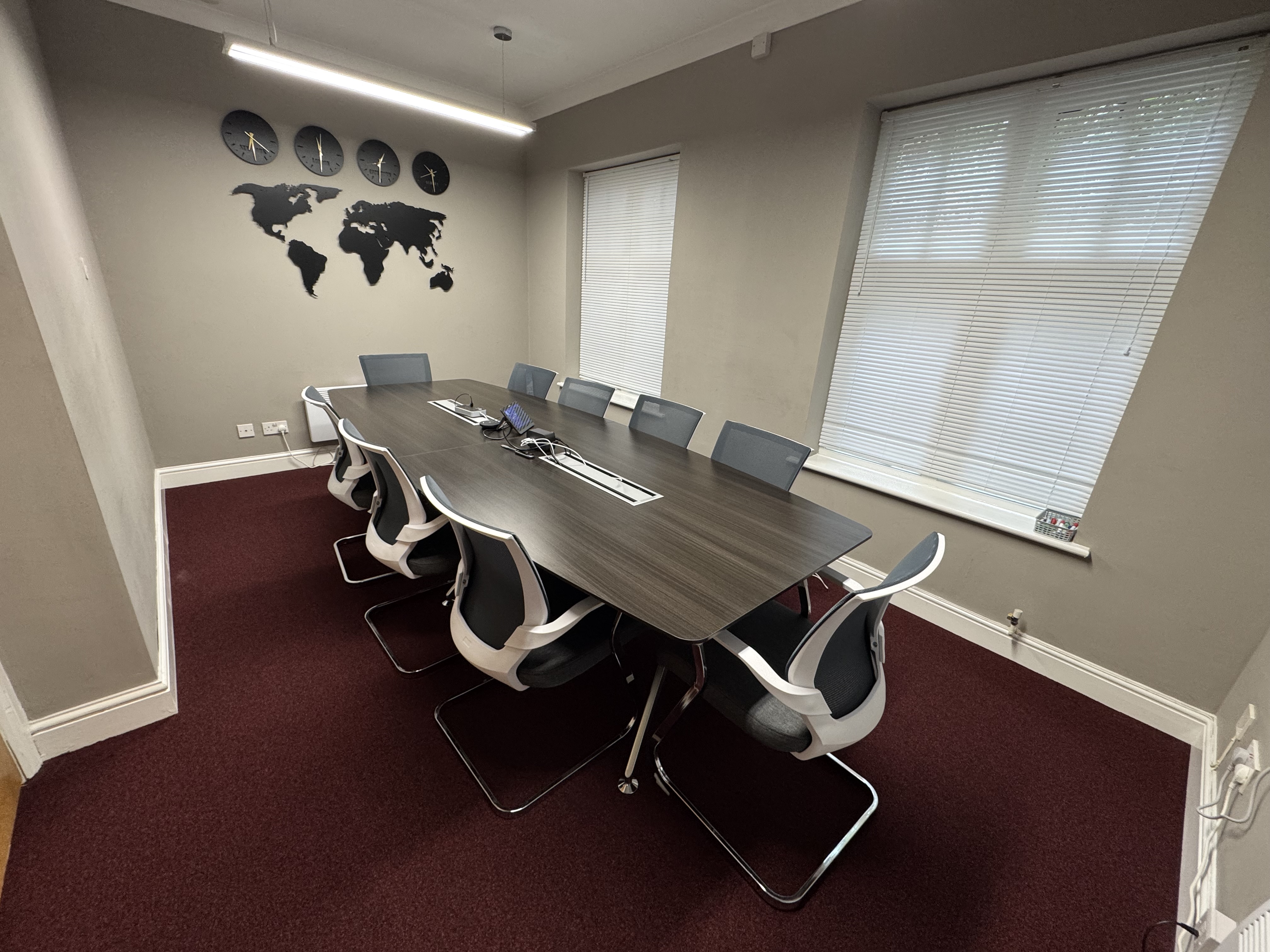
Meeting spaces often included with flexible office agreements
The "All-Inclusive" Advantage
One of the biggest benefits of flexible space – and one that's easy to underestimate – is the simplicity of a single monthly payment.
With a traditional lease, you're managing multiple suppliers and invoices: the landlord, utilities providers, internet suppliers, cleaners, maintenance contractors, insurance brokers. Each one takes time, and each one can surprise you with unexpected costs.
With an all-inclusive flexible licence, you know exactly what you're paying each month. That predictability makes budgeting simpler and frees up your time to focus on actually running your business.
Questions to Ask Yourself
Before making a decision, honestly answer these questions:
- How certain are you about your space needs in 3 years? If you're confident, a lease might make sense. If not, flexibility is valuable.
- How much capital can you tie up in fit-out and deposits? Traditional leases demand significant upfront investment.
- Do you have time to manage property responsibilities? Leases require ongoing attention to maintenance, compliance, and supplier relationships.
- How important is it to customise your space? If branding and bespoke design are critical, you may need a lease.
- What's your exit strategy if things change? Flexible terms make pivoting much easier.
The Middle Ground
It's worth noting that not all flexible space is the same. Some providers offer longer-term agreements (1-3 years) at reduced rates, giving you some of the cost benefits of a lease with more flexibility built in.
At Surrey & Bucks Business Centres, we offer licence agreements from 3 months, but many of our tenants stay for years – some for over 15 years. The flexibility is there if you need it, but you're not forced to move on if you're happy.
Our Recommendation
For most small to medium businesses, especially those in growth phases or adapting to hybrid working, flexible office space offers a better balance of cost, convenience, and risk management. The "all-inclusive" model simplifies your life, the shorter terms protect you from changing circumstances, and the lower upfront costs preserve capital for investment in your actual business.
That said, every business is different. The right choice depends on your specific situation, growth plans, and risk tolerance.
Not Sure What's Right for You?
We're happy to talk through your options – no pressure, no sales pitch. Just honest advice based on 20+ years of helping businesses find the right workspace.
Get in Touch